


Sensitive skin sunscreen should work with your skin, not against it. SolRX mineral formulas are fragrance-free, oxybenzone-free, non-comedogenic, and dermatologist-tested for reactive, condition-prone, and post-treatment skin. Broad-spectrum SPF 50 protection built for daily wear.


Frequently Asked Questions About Sensitive Skin Sunscreen
What makes a sunscreen safe for sensitive skin?
A sunscreen formulated for sensitive skin should be free of synthetic fragrance, chemical UV filters like oxybenzone and octinoxate, alcohol, and harsh preservatives. These ingredients are the most common triggers for sensitive skin reactions. Look for mineral active ingredients, specifically zinc oxide or titanium dioxide, which sit on the surface of the skin rather than absorbing into it. The formula should be labeled fragrance-free, non-comedogenic, and hypoallergenic, and ideally clinically tested on reactive skin types.
Is mineral sunscreen better than chemical sunscreen for sensitive skin?
For most people with sensitive skin, yes. Chemical UV filters absorb into the skin and can cause stinging, flushing, and irritation in reactive skin types. Mineral filters, specifically zinc oxide and titanium dioxide, sit on the skin's surface and physically block UV rays without being absorbed. This makes them significantly less likely to trigger reactions. Dermatologists consistently recommend mineral sunscreen for sensitive skin, rosacea-prone skin, eczema-prone skin, and post-procedure skin.
What ingredients should I avoid in sunscreen if I have sensitive skin?
Avoid sunscreens containing synthetic fragrance, which is the leading cause of allergic skin reactions. Also avoid oxybenzone, octinoxate, avobenzone, homosalate, and other chemical UV filters if your skin is reactive. Alcohol-based formulas can be drying and irritating. Botanical essential oils, even when naturally derived, can trigger reactions in highly sensitive skin. Look for formulas that are specifically labeled fragrance-free, hypoallergenic, and mineral-based.
What SPF should someone with sensitive skin use?
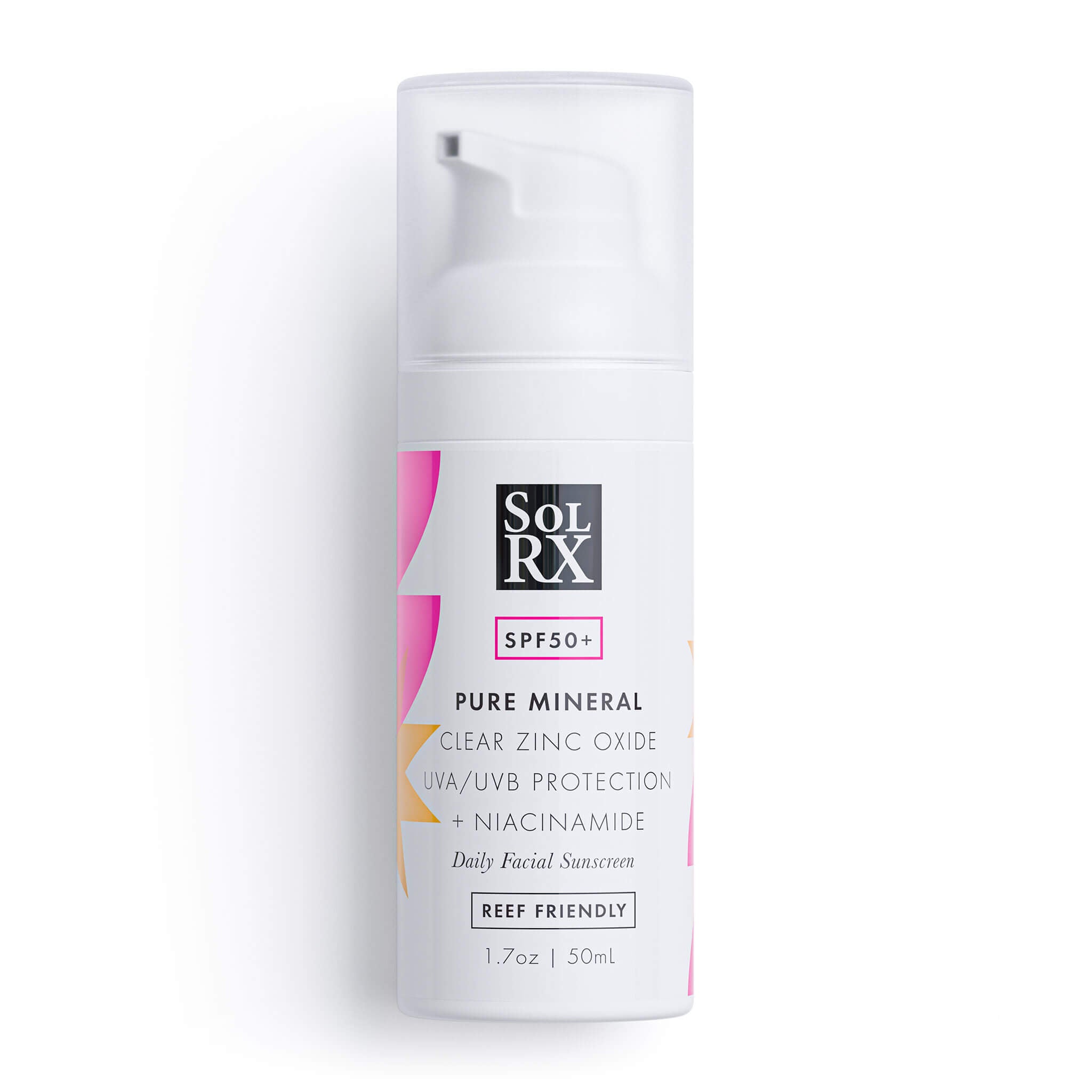
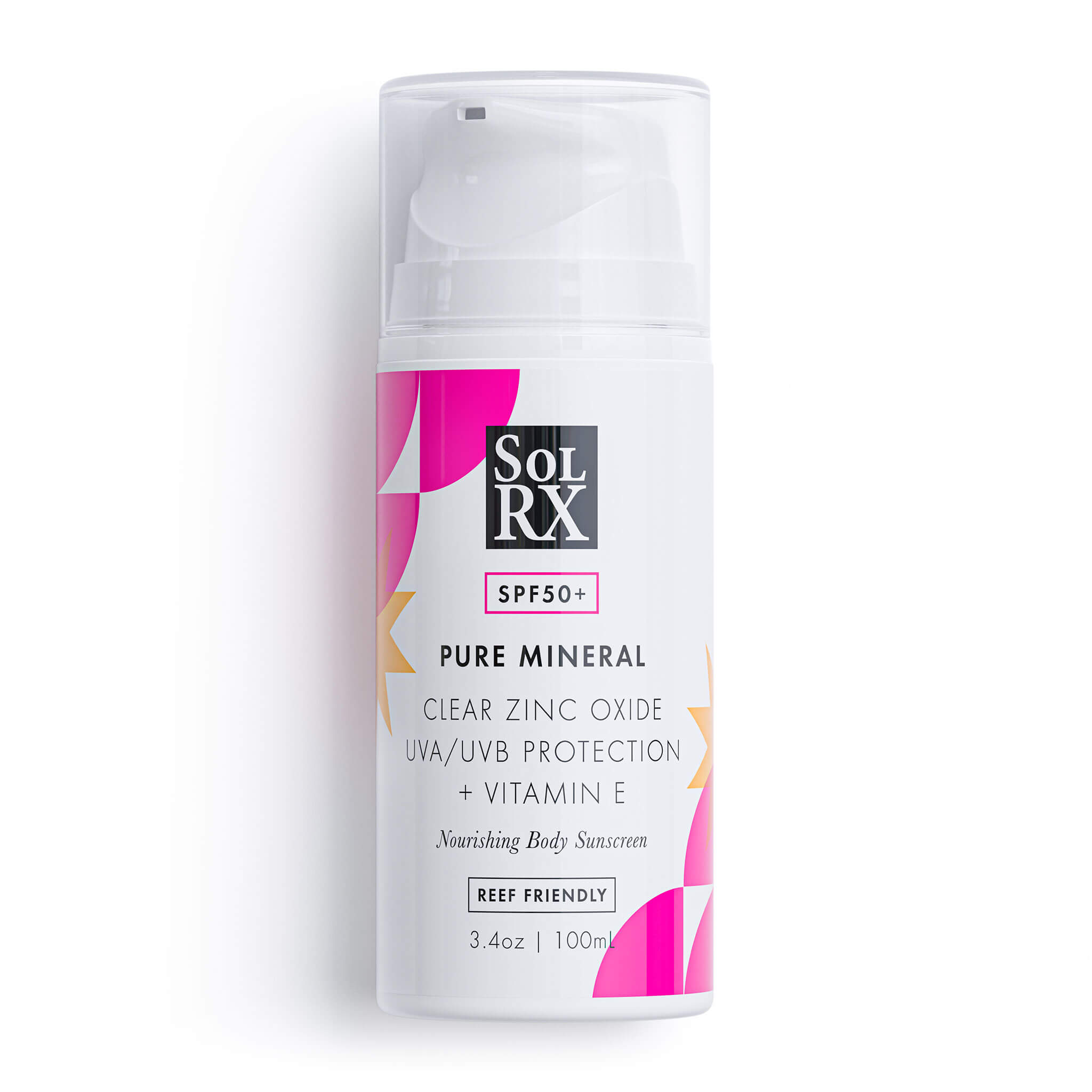
SPF 30 is the minimum recommended for daily use. SPF 50 or higher is recommended for extended outdoor time, and is the standard for individuals with skin conditions including rosacea and eczema, whose compromised barriers make them more vulnerable to UV damage. Higher SPF does not mean a more irritating formula. What matters is the type of UV filter and the supporting ingredients. SolRX Pure Mineral SPF 50 uses zinc oxide 20% and is specifically formulated for sensitive and reactive skin.
Can sunscreen cause a skin reaction on sensitive skin?
Yes, some sunscreen formulas can cause reactions in sensitive skin, but it is rarely the UV protection itself causing the issue. The most common culprits are synthetic fragrance, chemical UV filters, alcohol, and certain preservatives. If you have experienced a reaction to a sunscreen in the past, switching to a fragrance-free, mineral-based formula often resolves it. Always patch test any new formula on your inner arm for 24 hours before applying to your face.
Is zinc oxide safe for sensitive and reactive skin?
Yes. Zinc oxide is one of the safest and most well-tolerated ingredients for sensitive skin. It is naturally anti-inflammatory and calming, making it suitable for skin conditions including rosacea, eczema, and acne-prone skin. Unlike chemical UV filters, zinc oxide does not absorb into the skin, so it is far less likely to cause irritation or allergic reactions. It is the active ingredient used in many diaper rash creams, which reflects its long safety record on the most reactive skin types.
Is mineral sunscreen safe for rosacea-prone skin?
Yes, and it is the preferred choice. Sun exposure is the number one reported trigger for rosacea flares. Daily broad-spectrum mineral sunscreen is one of the most evidence-supported tools for reducing flare frequency. The National Rosacea Society and board-certified dermatologists specifically recommend zinc oxide and titanium dioxide formulas for rosacea management because they do not cause the stinging, burning, or increased skin temperature that chemical filters can produce. Fragrance-free is equally important, as synthetic fragrances are a common rosacea irritant.
Can I use sunscreen after a chemical peel or laser treatment?
Yes, and daily SPF is non-negotiable during post-procedure recovery. After treatments including chemical peels, laser resurfacing, microneedling, and IPL, the skin barrier is temporarily compromised and significantly more vulnerable to UV damage. The formula choice is critical during this window. Post-procedure skin requires mineral sunscreen with no chemical UV filters, no fragrance, and no alcohol. SolRX Pure Mineral formulas use zinc oxide 20%, are completely fragrance-free, and are trusted by dermatology and medspa practices for post-treatment skin care.
What is the best sunscreen for eczema-prone skin?
The National Eczema Association recommends mineral-based, fragrance-free sunscreens for individuals with atopic dermatitis. Look for zinc oxide or titanium dioxide as the active ingredient, and confirm the formula is free of synthetic fragrance, alcohol, and chemical UV filters that can penetrate a compromised skin barrier and trigger a flare. A lightweight, non-comedogenic texture prevents the heavy, occlusive feel that can worsen discomfort on reactive skin. SolRX Pure Mineral formulas meet all of these requirements and are hypoallergenic and dermatologist-tested.
Does mineral sunscreen leave a white cast on sensitive skin?
Modern mineral formulations do not. Earlier zinc oxide sunscreens used larger particles that left a visible white residue, particularly on medium to deeper skin tones. SolRX Pure Mineral formulas use micronized zinc oxide that disperses evenly and dries completely clear on all skin tones. The no white cast formula means you get the gentlest sun protection available without the cosmetic compromise that older mineral sunscreens required.
Can I use sunscreen every day if I have sensitive skin?
Yes, and daily use is strongly recommended. UV damage accumulates with every exposure, including incidental exposure through windows and during everyday activities. For skin conditions like rosacea and eczema, even low-level daily UV exposure can drive inflammation and worsen symptoms over time. The key is finding a formula your skin tolerates well. A fragrance-free, mineral-based sunscreen used consistently every morning is one of the most protective skincare habits you can build for sensitive or reactive skin.
How does niacinamide benefit sensitive skin?
Niacinamide, also known as vitamin B3, is one of the most effective and well-tolerated ingredients for sensitive and reactive skin. It strengthens the skin barrier, which is often compromised in sensitive skin types, reducing permeability and making the skin less reactive to irritants over time. It also calms redness, reduces inflammation, minimizes the appearance of pores, and helps even skin tone. In SolRX Pure Mineral formulas, niacinamide works alongside zinc oxide to provide both UV protection and active skin support in a single daily step.
How should I apply sunscreen if I have sensitive or rosacea-prone skin?
Apply sunscreen as the final step of your morning skincare routine, after moisturizer and before makeup. Use a nickel-sized amount for your face and neck. Instead of rubbing, use the dab-and-blend technique: dot small amounts across your face and blend gently in circular motions. This minimizes friction and drag, which is especially important for rosacea-prone skin. Apply to clean, dry skin rather than immediately after active ingredients like retinoids or exfoliating acids, which can increase sensitivity on reactive skin.
Does expired sunscreen irritate sensitive skin more?
Yes. Expired sunscreen can be more irritating because the active ingredients break down over time, becoming less stable and potentially more reactive on sensitive skin. Beyond irritation, expired sunscreen also provides reduced or unreliable UV protection, which is a concern for anyone managing a sun-triggered skin condition. Check the expiration date before applying, and discard sunscreen that has changed in smell, texture, or appearance. Most sunscreens have a shelf life of two to three years from the manufacture date.

