


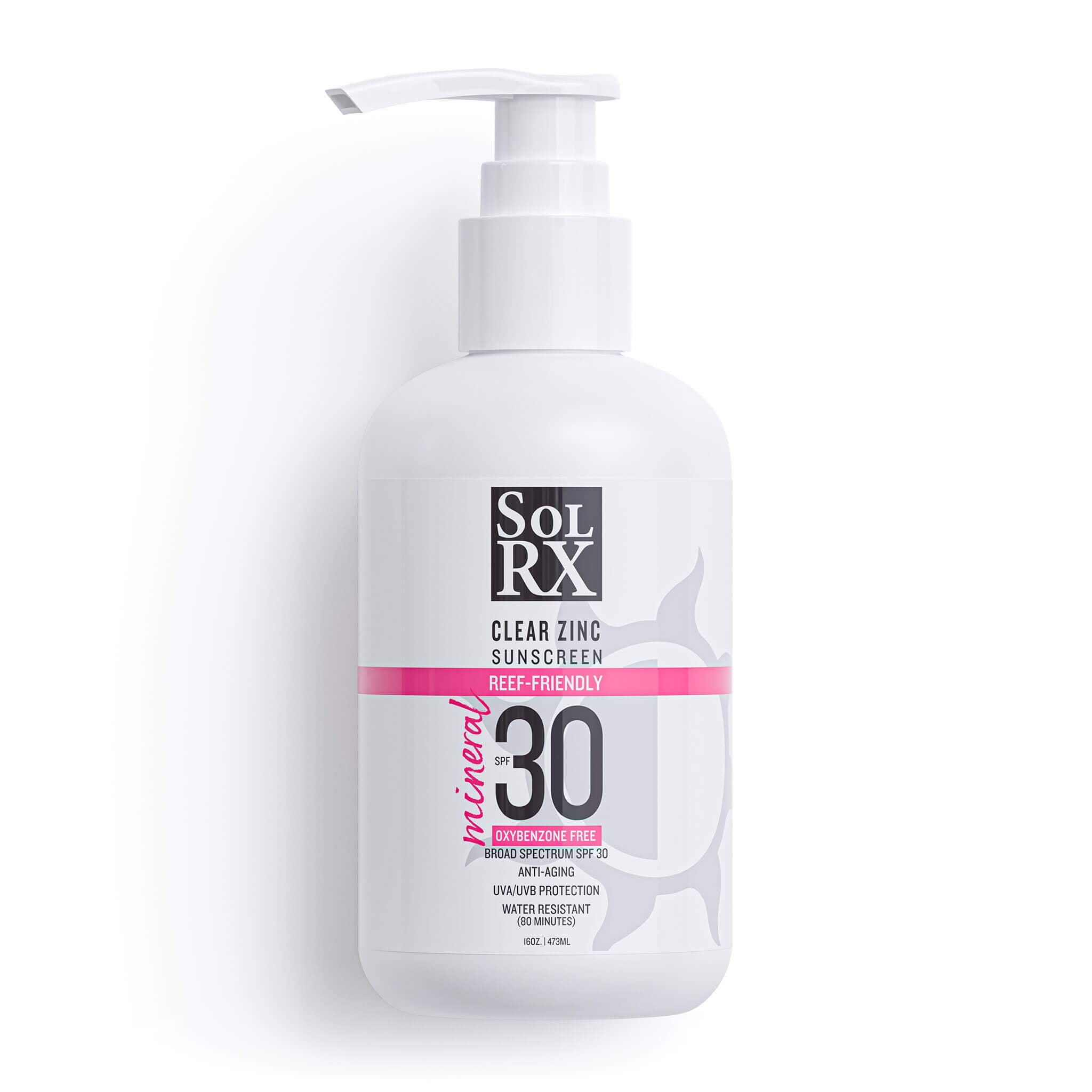
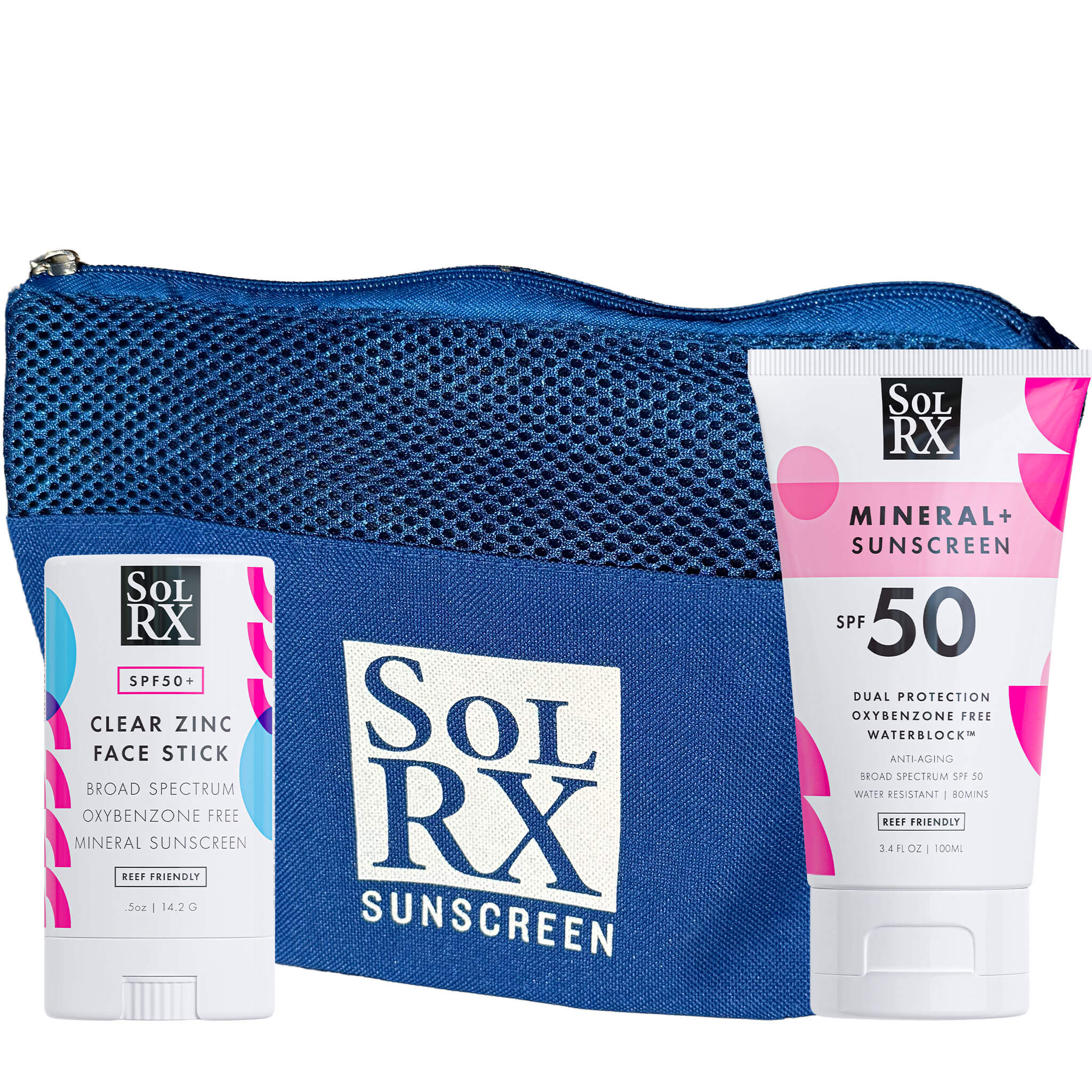
Mineral sunscreen with zinc oxide and no white cast. SolRX mineral formulas deliver broad-spectrum SPF protection using only the UV filters the FDA recognizes as safe and effective. Dermatologist-tested, reef-safe, Made in USA.

What Is Mineral Sunscreen?
Mineral sunscreen is a type of broad-spectrum sun protection that uses physical UV filters, zinc oxide and titanium dioxide, to block and reflect ultraviolet radiation before it reaches your skin. Unlike chemical sunscreens, which absorb UV rays and convert them to heat inside the skin, mineral sunscreen works at the surface level, creating a physical barrier that deflects both UVA and UVB rays.
The FDA currently recognizes zinc oxide and titanium dioxide as the only two UV filters that are Generally Recognized as Safe and Effective (GRASE). Every other UV filter used in chemical sunscreens, including oxybenzone, avobenzone, octinoxate, and homosalate, is still under FDA review pending additional safety data. That distinction matters when you are choosing what to put on your skin every day.
SolRX mineral sunscreen formulas are built on zinc oxide, the broadest-spectrum mineral UV filter available. Zinc oxide provides complete UVA and UVB coverage in a single ingredient, without requiring the cocktail of chemical filters that most conventional sunscreens rely on. The result is a cleaner formula with fewer ingredients and no compromise on protection.
Mineral Sunscreen vs Chemical Sunscreen: What the Difference Actually Means
The mineral vs chemical debate comes down to one fundamental difference: where the protection happens. Mineral sunscreen filters sit on top of the skin and physically block UV rays. Chemical sunscreen filters absorb into the outer skin layers and undergo a chemical reaction that converts UV energy to heat.
For most people, that distinction has practical consequences. Chemical UV filters require 15 to 30 minutes to become effective after application because they need time to absorb. Mineral sunscreen works immediately. Chemical filters are more likely to cause irritation, stinging, or allergic reactions, particularly in people with sensitive skin. Mineral filters are inherently gentler because they do not require skin absorption to function.
The FDA safety concern with chemical UV filters is also significant. In 2021, the FDA proposed that oxybenzone, octinoxate, octocrylene, and several other common chemical UV filters could not be classified as GRASE without additional safety data. Studies have found oxybenzone in blood plasma after single applications and in breast milk. Zinc oxide and titanium dioxide have not raised the same concerns because they are not absorbed into the body in meaningful amounts.
Dermatologists increasingly recommend mineral sunscreen for anyone with sensitive skin, children, pregnant women, and anyone who prefers to limit chemical exposure. It is also the only type of sunscreen permitted in reef-protected marine environments in Hawaii, Maui County, the U.S. Virgin Islands, Palau, and several other jurisdictions.
The White Cast Problem: Why Modern Mineral Sunscreen Is Different
The most common objection to mineral sunscreen is the white cast. It is a legitimate concern rooted in how older zinc oxide formulas were made, and it is the reason many people switched to chemical sunscreens and never looked back. But modern mineral sunscreen technology has largely solved this problem.
White cast comes from the particle size of zinc oxide and titanium dioxide. In older formulas, these particles were large enough to scatter visible light, creating the chalky white residue that became synonymous with mineral SPF. The solution was micronization, the process of grinding the particles much smaller so they scatter less visible light while still blocking UV rays effectively.
SolRX mineral formulas use micronized zinc oxide specifically engineered for a no white cast finish. The particles are small enough to blend into all skin tones without leaving visible residue, while remaining large enough to provide full-spectrum UV protection. The result is mineral protection that looks and feels closer to a chemical sunscreen on the skin, without the chemical UV filters.
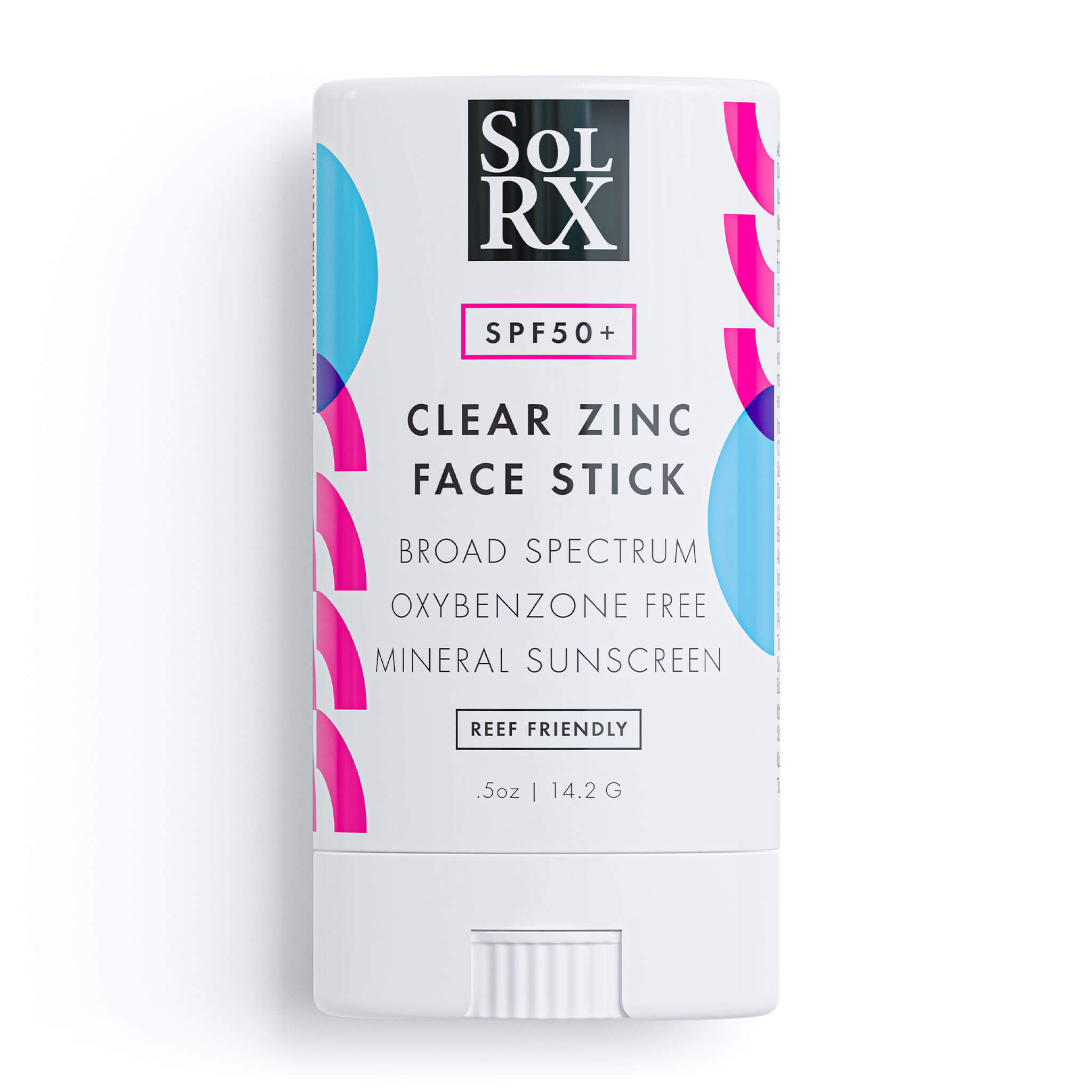
The no white cast claim applies to SolRX mineral lotion and face formulas. For maximum UV blocking with a visible zinc finish, the SolRX Clear Zinc Face Stick uses a higher concentration of zinc oxide, which may leave a slight tint on application before blending. That is by design for people who want the highest possible mineral UV coverage for exposed face areas.
Is Zinc Oxide Better Than Other Sunscreen Ingredients?
Zinc oxide is the most complete UV filter available. It provides broad-spectrum coverage across the full UVA and UVB spectrum in a single ingredient. Most chemical sunscreens require several UV filters in combination to achieve the same coverage, because individual chemical filters only block specific wavelength ranges.
Zinc oxide blocks UVA1 rays (340 to 400nm), UVA2 rays (320 to 340nm), and UVB rays (290 to 320nm). Avobenzone, the most common chemical UVA filter, only covers UVA1. Octinoxate covers UVB but not UVA. Getting full-spectrum coverage from chemical filters requires combining multiple ingredients, each of which comes with its own safety profile and potential for irritation.
Titanium dioxide is also a mineral UV filter, but it covers a narrower range than zinc oxide, primarily UVB and short-wave UVA. Some mineral formulas combine zinc oxide and titanium dioxide to achieve different textures or SPF levels. SolRX mineral formulas are built on zinc oxide because it provides the most complete single-ingredient coverage available.
The comparison to chemical filters also matters for longevity. Zinc oxide is photostable, meaning it does not break down when exposed to UV light. Several chemical UV filters, including avobenzone, are photounstable and degrade with sun exposure, reducing their effectiveness over time. Zinc oxide maintains its protective properties throughout the wear period.
Who Should Use Mineral Sunscreen?
Mineral sunscreen is the right choice for a wide range of people, but it is particularly well suited for specific skin types and situations.
People with sensitive skin benefit most from mineral sunscreen because zinc oxide does not require skin absorption and is less likely to trigger irritation or allergic reactions. Zinc oxide is also naturally anti-inflammatory, which can help calm reactive or redness-prone skin rather than aggravating it the way some chemical filters can.
Children should use mineral sunscreen whenever possible. The American Academy of Pediatrics recommends mineral sunscreen for infants over 6 months and for young children because of the reduced chemical exposure and lower irritation risk. SolRX Kids SPF 50 Waterblock is formulated specifically for children's skin.
Pregnant and breastfeeding women are advised to choose mineral sunscreen to limit chemical UV filter exposure. Oxybenzone in particular has been detected in breast milk, and while the health implications are still being studied, mineral sunscreen eliminates that concern entirely.
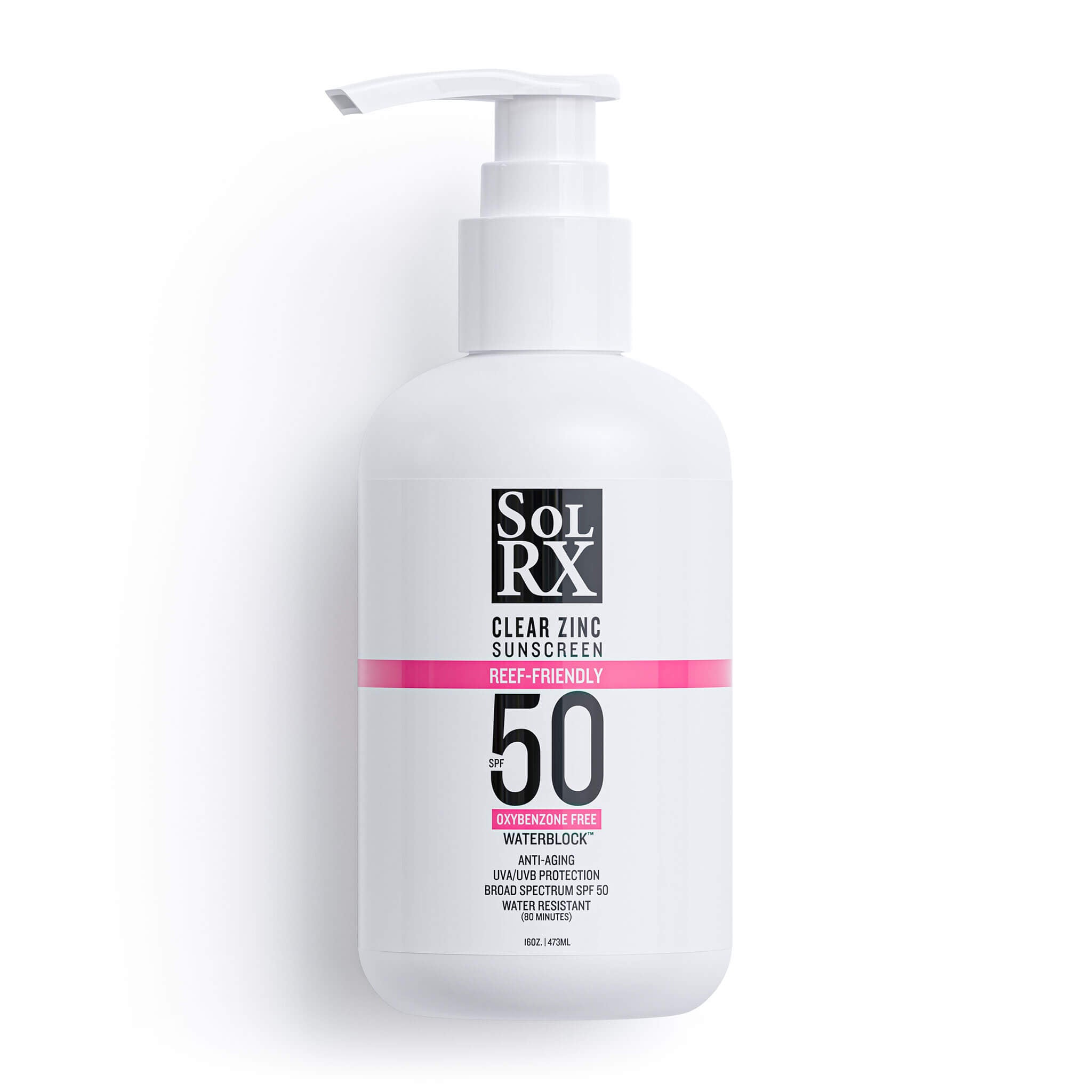
Athletes and outdoor workers who need water resistant sunscreen can use mineral formulas confidently. SolRX mineral formulas carry an 80-minute water resistance rating, the maximum available in a mineral format. For the longest water resistance available anywhere, SolRX Waterblock lotion formulas extend that to 8 clinically tested hours.
Anyone spending time in or near reef-protected waters needs mineral sunscreen. Hawaii, Maui County, the U.S. Virgin Islands, Palau, and several other destinations require reef-safe sunscreen by law. Only mineral formulas using zinc oxide and titanium dioxide qualify.
How to Apply Mineral Sunscreen for Full Protection
Mineral sunscreen works immediately upon application, unlike chemical sunscreen which requires a 15 to 30 minute wait. But proper application technique still matters for ensuring full coverage and maximum SPF performance.
- Apply generously. The FDA recommends one ounce, roughly a shot glass full, for complete body coverage. Most people apply 25 to 50 percent less than they need, which proportionally reduces the SPF they actually receive. Under-application is the most common reason sunscreen appears to fail.
- Use the 3-finger rule for your face. Squeeze sunscreen across three fingers and apply the full amount to your face and neck. This approximates the amount used in clinical SPF testing and ensures you receive the protection on the label.
- Blend thoroughly. Mineral sunscreen needs to be rubbed in completely to provide even coverage. Unlike chemical sunscreen, which absorbs on its own, mineral filters stay at the surface and need to be distributed evenly across the skin.
- Reapply every two hours. UV exposure degrades sunscreen over time regardless of formula. Reapply every two hours during sun exposure and immediately after swimming, sweating heavily, or towel drying.
- Apply moisturizer first if needed. If you use a separate moisturizer, apply it first and allow it to absorb before applying mineral sunscreen. This prevents the formulas from mixing and ensures both products perform as intended.
- Cover high-exposure areas. Ears, the back of the neck, tops of feet, and the lip area are commonly missed. Use a dedicated face and lip formula for targeted coverage on smaller areas.
Mineral Sunscreen for Face vs Body: What to Know
Facial skin has different needs than body skin. It is thinner, more prone to sensitivity, more visible, and more likely to be layered under makeup or other skincare. A mineral sunscreen formulated for the face takes these differences into account.
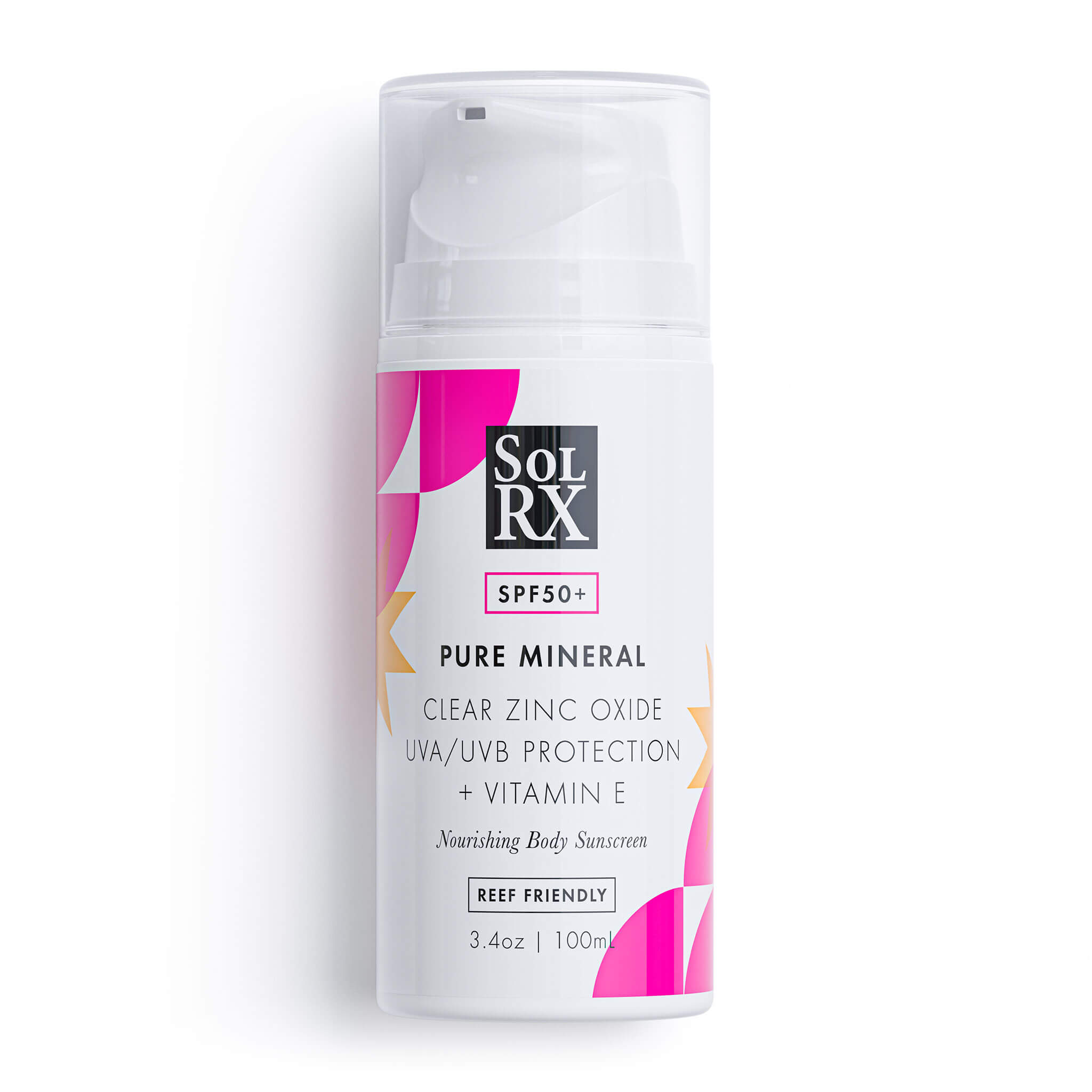
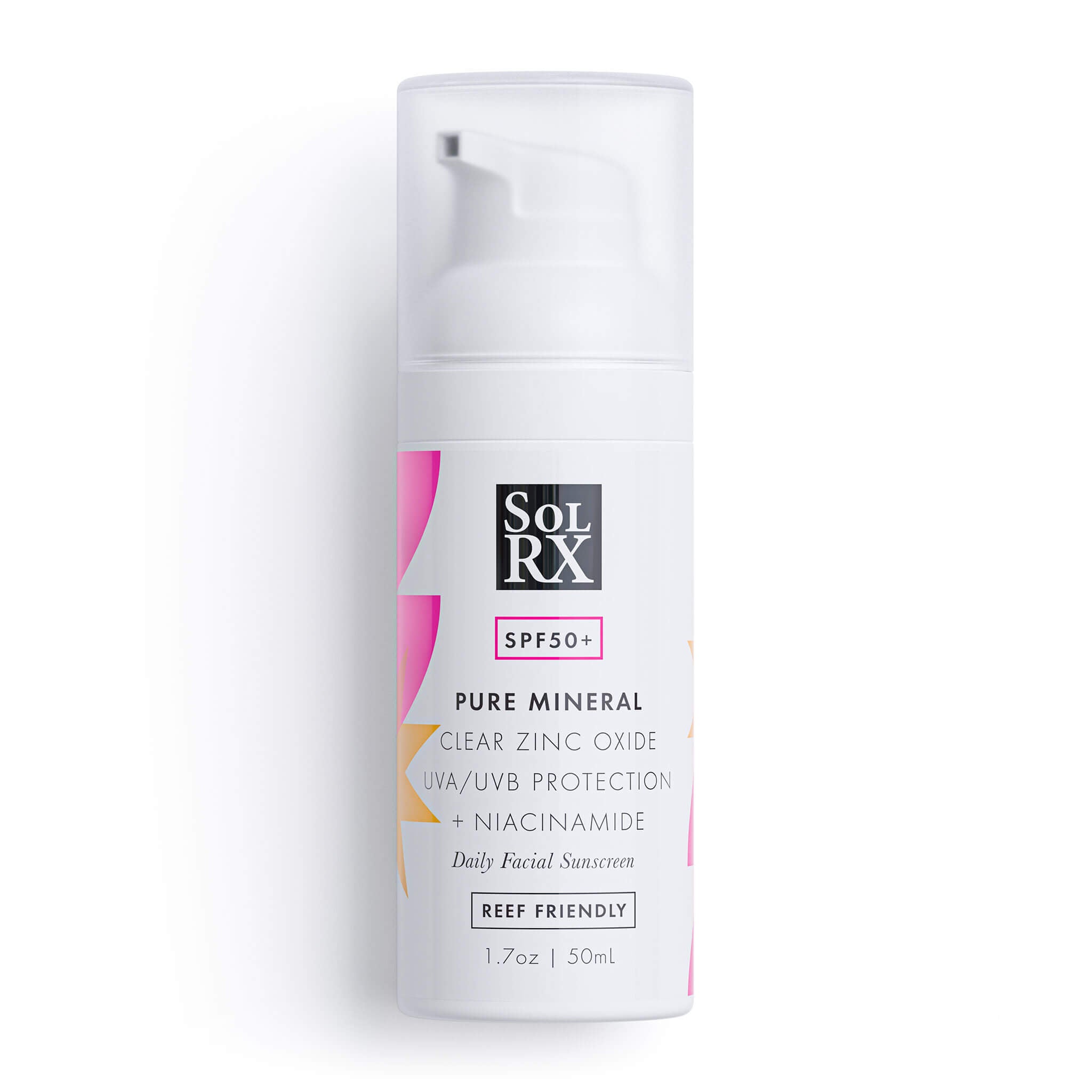
SolRX Pure Mineral face formulas include niacinamide (vitamin B3) and vitamin E alongside zinc oxide. Niacinamide helps improve skin texture, minimize pores, reduce inflammation, and even out skin tone over time. Vitamin E is an antioxidant that supports skin repair and helps neutralize free radical damage from UV exposure. Together, these ingredients turn sun protection into an active skincare step rather than just a barrier product.
For the body, SolRX mineral body formulas provide the same zinc oxide protection in a larger format designed for efficient full-body application. The texture is optimized for larger surface areas and blends easily without leaving residue on clothing.
For targeted reapplication throughout the day, the SolRX Clear Zinc Face Stick is a no-mess stick format that goes on clean without requiring hand washing and fits in a bag or pocket for on-the-go coverage. It is particularly useful for high-exposure areas like the nose, cheeks, and forehead during outdoor activity.
Mineral Sunscreen and Skin Tone: Does It Work for Everyone?
White cast has historically made mineral sunscreen impractical for medium and deeper skin tones. Older zinc oxide formulas left a visible ashy or white film that was cosmetically unacceptable for many people. This drove the widespread adoption of chemical sunscreens across all skin tones despite the ingredient concerns.
Micronized zinc oxide has changed that dynamic. Modern mineral formulas, including SolRX, are engineered to minimize visible residue on all skin tones. The key is thorough blending immediately after application. Apply a small amount, blend completely, then add more if needed rather than applying a large amount at once.
For deeper skin tones, choosing a lotion format over a thicker balm or paste formula makes the most difference. Lotion-based mineral sunscreens spread more easily and blend more evenly than stick or paste formats. If any slight residue remains after blending, it typically disappears within a few minutes as the formula continues to settle on the skin.
Key Takeaways
-
Zinc oxide is the only UV filter the FDA currently recognizes as safe and effective for broad-spectrum protection.
Every SolRX mineral formula uses zinc oxide only, with no chemical UV filters. -
Modern mineral sunscreen leaves no white cast when formulated correctly.
SolRX mineral formulas use micronized zinc oxide engineered for a no white cast finish on all skin tones. -
Mineral sunscreen works immediately and is safe for sensitive skin, kids, and pregnancy.
No absorption wait time, no chemical UV filters, and no oxybenzone or octinoxate.
Sources
- U.S. Food and Drug Administration. Sunscreen Drug Products for Over-the-Counter Human Use. FDA.gov. 2021.
- U.S. Food and Drug Administration. FDA advances new proposed regulation to make sure that sunscreens are safe and effective. FDA.gov. 2019.
- American Academy of Dermatology. Sunscreen FAQs. AAD.org.
- American Academy of Pediatrics. Sun Safety. HealthyChildren.org.
- Matta, M.K. et al. Effect of Sunscreen Application on Plasma Concentration of Sunscreen Active Ingredients. JAMA. 2020.
- Downs, C.A. et al. Toxicopathological Effects of the Sunscreen UV Filter, Oxybenzone (Benzophenone-3), on Coral Planulae and Cultured Primary Cells. Archives of Environmental Contamination and Toxicology. 2016.
- Skin Cancer Foundation. Ask the Expert: Mineral vs. Chemical Sunscreens. SkinCancer.org.
- National Oceanic and Atmospheric Administration. Sunscreen Chemicals and Coral Reefs. OceanService.NOAA.gov.
- Wang, S.Q. et al. Photoprotection: A Review of the Current and Future Technologies. Dermatologic Therapy. 2010.
- Lautenschlager, S. et al. Photoprotection. The Lancet. 2007.

